Showing posts with label hay. Show all posts

Tuesday, January 15, 2019

A Farm Girl's Gloves


My box of gloves. 


A farm girl's gloves are her best friend throughout the year.


There is a glove for every chore and activity. I didn't realize how much I use gloves until I misplaced the box clearly marked "GLOVES" . I have been making do by borrowing from my husband and buying new pairs now and then. This morning while cleaning the hallway closet, I found the box on a shelf at knee height. What a joy to be reunited with my box of gloves !

Meet my gloves :


My Cold Winter Gloves


I own a rugged pair of gloves built for a cowhand with rough leather lined with softness to protect your fingers and hands in the freezing cold. When I look down at my hands on a corral gate I feel like a rancher or cowgirl from the old west. These were my first winter gloves in Utah. They are great for wiping away snow from the backs of llamas and hay stacks. Unlocking gates and dialing a phone can be near impossible so I take a glove off to unlock the latches and put the glove back on.


Thse gloves are good for watering
 or any wet chores.


These warm sweater knit type gloves with the rubberized palms and finger tips keep your fingertips dry and they are great when watering your herd and flock. There is nothing that is good about getting your gloved fingers wet on a cold, single digit morning.


Use gloves with Thinsulate reflects the
 heat right back
 into your hands and fingers.


Thinsulate is best for keeping your hands from freezing. It reflects the heat back into your fingers. Once my hands were painfilled with bitter cold, not even the barn heater gave me comfort. My fingers were numb. But put a pair of working gloves with thinsulate and the hands warm up very quickly. I do have a a slight size issue with these as the fingertips are an 1" longer than my own.


Driving and Parade Gloves


I have a sort of fancy work glove that is a creamy sort of leather for driving the tractor and the four-wheel buggy, we call it. They have a bit of smudged dirt on the underparts from running my hands on the wheel. I do have a clean pair that are good gloves for the parades.


One of my favorite pair of gloves
with the purple trim.


My mid-weight gloves are flexible and serve to warm my hands when weather first turns cold. These also make good weeding gloves. I have 4 of these. Some with splits on the inside of my fingers from grasping tumbleweed or mallow stems and worn spots on the finger tips from pulling the earth this way and that to plant. Here are two of the pairs below.


Hail to the all-purpose glove for gardening, weeding,
feeding, and most any chore.


This mid to lightweight glove also serves as protection from the sharp dry alfalfa stems, baling string, and the equipment when we take the bales off the trailer and onto it's place on the pallets. These are good for feeding hay to the llamas.


I do love my gloves. When I do not wear them my hands are rough as unpolished wood and I cannot feel any soft or silken surfaces without feeling my skin pick at the fabric like a hundred cactus needles.  

I am so glad I found my box of gloves. All is well in my world.


Deborah Moen
Little Utah Farm


Thank you for visiting Little Utah Farm,
(17,138 page views)

Until next time,

“Finn fell asleep draped in Kittens and dreamed that the corn walked the earth on skinny white roots, liked to joke with the crows, and wasn't afraid of anything.” 
― Laura Ruby, Bone Gap


Monday, September 24, 2018

It's Time to Buy Hay


Big bales of grass hay for the llamas. 


Yes it is that time of year when we go get hay. We get it as soon as our hay supplier bales it. These big bales of hay each weigh 1,200 lbs each. We bought 6 of them in October 2017 to last until June 2018. We are buying 6 bales again today.


 The llamas eat more in the winter yet the hay lasted 2 months longer than expected. What a blessing !


When the last morsel of this hay was fed to the llamas, August 12, I couldn't help but sing a ceremonious song of gratitude for the hay, the earth, the man who planted it, cut it, and baled it and also for my husband that went to pick it up in the trailer and stacked these giant hay bales behind the llama shelter. 


The last bit of the hay was as green and fresh as when we bought it last October. 


Deborah Moon Moen
of Little Utah Farm


Thank you for visiting Little Utah Farm
(16,171 page views)


Come shop at LittleUtahFarm
                   Store on Zazzle


We have pillows, throw blankets, mugs, and greeting cards and more coming.

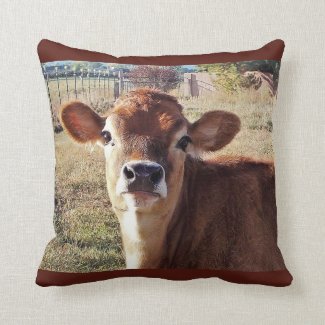
Amanda: Jersey Calf Pillow
by LittleUtahFarm


Check out our Vintage Halloween Cards 


Tuesday, November 21, 2017

Winter Layers For My Garden

Compost right over the soil.

I discovered a natural way to nourish our garden soil and keeps the weeds down. In this post, I will share how I did it.

 Our soil is hard clay and for 5 years we have mixed in llama manure and rototilled it in. I came across this method of putting layers of materials over the top of the soil like you would a compost pile. This process will invite beneficial microbes, bacteria and earthworms. It will also keep most of the weeds from growing. 

Autumn is now in full force. The nights are in the 20's. The orb weaver cat spiders, which came to visit us this year, transitioned in the cold leaving their beautiful webs behind. The grasses in the pasture have begun to brown, and the leaves that fell from Grandmother Apple Tree were mulched and placed in a pile by the corn field to use later in the garden. 

The garden was dismantled, cleared, and ready for a nourishing mask of green manure, kitchen scraps, hay, and fallen leaves. Husband went out and collected cardboard boxes for the project. You can also use newspaper ( no colored ink or shiny surfaces) discarded toilet paper rolls, shredded junk mail ( no colored inks or shiny surfaces) We had everything else we needed like kitchen scraps, tea bags, hay, llama manure, dead leaves, and hay or straw.

Here is how we laid the layers in the garden.

      1. Removed any tape from the boxes and cut them to lie flat. 

       2. Water the soil first then lay down the cardboard. I let them overlap about 6" so the weeds cannot come through.

      3. Water over the cardboard.

      4. Put down green manure on the cardboard. We used fresh llama manure and kitchen scraps. 

       5. Water over the manure.

      6. Scatter dead leaves and hay or straw over the manure. 

      7.Water over the leaves

You can repeat these layers if you want to. Water each layer.  

The snows will come and in the spring the ice will melt into this nourishing mask and it will be ready for planting and seeding. 
The cardboard will be easy to penetrate for planting or roots to grow through. If the cardboard is still firm, then I cut a hole or x’s in the cardboard to plant.

I thoroughly enjoyed this project. I felt close to Mother Nature. I am also doing the layer technique in our garden boxes. I will lay down what is left from the plants in the boxes and begin to layer over that. 

Thank you for visiting Little Utah Farm
(14, 221 page views)

Until next time, 


Garden as though you will live forever.
                                                         ~ William Kent

DeborahMoonMoen
Little Utah Farm


Saturday, August 25, 2012

I AM MAKING MY OWN HAY

A personal story
by Deborah `Moon` Moen

Deborah Moon Moen August 8, 2012

Providing food for my livestock is rewarding.

While I cut the hay, I become like a true pioneer woman.


Hacking and cutting, soaking up the sun, wiping my brow, and finding coolness in the shade and a frosty glass of iced tea, is a labor of love for me.


  • We plant it
  • Water it
  • Let it grow till about 1 ½ feet tall
  • Cut it
  • Let it dry in the sun
  • Rake it in long rows
  • Pitch it in the wagon
  • Cover it

Startin' it up is a hoot.

I use a heavy duty weed whacker.

  1. I pump it
  2. prime it
  3. pull on the cord
  4. the motor whirls and grinds
  5. I heft it off the ground
  6. swing it gracefully from side to side, low to the ground.

“Better move!” I say to the mice and moles, “Here I come!”


The hay falls down.

In time I am through. I ask the sun to bake the hay. By noon I am back with a long metal rake with a wide toothy comb. I pull the hay into long rows to help it weave together as it dries.

Raking rows LUF 2012


Afternoon I pitch the hay


 I hold the big black tongue of the wagon and pull her into the rows. As I pitched the wagon is filled with heaping mounds of sweet smelling hay. Husband loved my nice straight rows and I could tell he wanted to load the hay too. I decided to share the hay. I got a big grin from him and he went right to work. A labor of love.


Paul pitches hay as the storm clouds approach Little Utah Farm.


And then to dwell in sovereign barns,
And dream the days away,---
The grass so little has to do,
I wish I were the hay!
~ Emily Dickinson 1890 " The Grass"


My favorite part of home grown hay

Here is a very short video (30 seconds) I made of our llamas eating the home grown hay.


Thank you for coming by to visit Little Utah Farm. The rains came shortly after the last stalks of hay were tarped and tucked away that day. But that is a story for next time...
Until then believe in your dreams,
Deborah `Moon`
 

Pissarro. Rest. 1882.
http://www.hayinart.com/001405.html#greenwell
Emily Dickinson(1830-1886).
“The Grass”
from Poems (1890)
The grass so little has to do,---
A sphere of simple green,
With only butterflies to brood,
And bees to entertain,
And stir all day to pretty tunes
The breezes fetch along,
And hold the sunshine in its lap
And bow to everything;
And thread the dews all night, like pearls,
And make itself so fine,---
A duchess were too common
For such a noticing.

And even when it dies, to pass
In odors so divine,
As lowly spices gone to sleep,
Or amulets of pine.
And then to dwell in sovereign barns,
And dream the days away,---
The grass so little has to do,
I wish I were the hay!