Showing posts with label straw. Show all posts

Wednesday, September 26, 2018

Pioneer Boulangerie Lemon Cake


Pioneer Boulangerie Lemon Cake


My Mother loved lemon desserts so I found this recipe to make for her birthday. I quickly chose this recipe because it sounded so good and this lemon cake is not only good it is scrumptious ! And 30 years later we are still making it and giving away the recipe. The picture above was taken by my daughter after she herself made this Pioneer Boulangerie Lemon Cake.

 I found that the Pioneer Boulangerie is a world-renowned French cafe.  So here you go lemon lovers. This is easy and fun to make.  Bon Appetit !


PIONEER BOULANGERIE LEMON CAKE 


1 (1 lb. 2.5 oz.) pkg. yellow cake mix
1 (3 3/4 oz.) pkg. instant lemon pudding mix
4 eggs
3/4 c. oil
3/4 c. water


Lemon Icing


Combine yellow cake and lemon pudding mixes with eggs, oil and water and mix well 2 to 3 minutes with mixer. Turn into ungreased 13 x 9-inch baking pan and bake at 350 degrees for 30 to 35 minutes or until cake springs back when lightly touched. Remove from oven. While warm, pierce surface of cake with tines of fork or poke with a straw and pour lemon icing ( recipe below) evenly over cake. Makes 12 to 15 servings.


LEMON ICING


1 (1 lb.) box powdered sugar
2/3 c. lemon juice
2 tbsp. melted butter
2 tbsp. water


Combine powdered sugar, lemon juice, butter and water and beat with mixer until smooth. After poking holes, pour over cake while still warm.


Thank you for visiting Little Utah Farm,
(16,204 page views) 

Until next time 

Enjoy the turning of the season,


Deborah Moon Moen
of Little Utah Farm

Come Visit our Facebook Page
Little Utah Farm


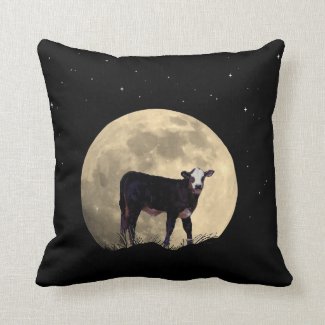
Come and visit Beau, a Black Baldface
pet calf on pillows. He is a cutie. His mom is a Hereford and his daddy a Black Angus. Here is in front of the full moon and starry skies.

Thursday, February 1, 2018

Gathering Duck & Hen Eggs


Ducks and hen eggs uncovered on Little Utah Farm


Every morning I go on an egg hunt. It is really fun. I feel happy and curious like a child while I search for the eggs.


Lolli, Ducky, and Daisy slurp up some snow
 after foraging through the garden. Little Utah Farm.


We have 3 Buff Orpington ducks. Their names are Lolli, Daisy, and Ducky. Some of their nests are so nice that the hens prefer to lay their eggs right in with the larger white duck eggs. I can tell who is who. The Aracana, Pearle and Isis, lay beautiful blue-green eggs. The White Plymouth, Angel and Fae lay pale light brown eggs. The Giant Black Jersey, Maven, lays a similar light brown egg. And they look so pretty all together in the nest.

Duck eggs are different than chicken eggs. I think they tast same but some people swear there is a difference. The only difference I can see is the size and the fact that Duck eggs have less water content in the white portion. They cook faster.

The ducks dig the nest deep and line it with an intricate weave of straw and feathers till it makes a nice shape, like an upside down crown of a straw hat. After they lay their eggs, they cover everything up with straw till it is even with the ground. I have to stick my hand down into the straw and wiggle my fingers around to find those eggs.


Sometimes I find a duck egg lying in the center of the coop as if it just fell out on the way to a nest. And it probably did. One of the ducks, I think it is Daisy, has been doing that since she began laying in the fall. I also find an occasional egg in the shallow pond or on the grass lawn. It makes me laugh.


8 Eggs gathered in one day. Little Utah Farm


We share our eggs with our neighbors and in town. With 8 hens and 3 ducks I gather at least 5 eggs a day. Some days, like yesterday, I gather 8. That adds up fast!

I am about to go out this morning on another egg hunt. I would love to have one of those egg pocket aprons. I think I will sew my own before spring gets here.


Deborah Moon Moen

Thank you for visiting Little Utah Farm
(page views 14,503)

Until next time, I found a story for you to enjoy.

“I have never before gathered eggs from under a hen. Fernando has never before seen a hen. We bend low into the shed where perch a dozen or so fat lady birds. There's no shrieking or fluttering at all. I approach one and ask if she has an egg or two. Nothing. I ask in Italian. Still nothing. I ask Fernando to pick her up but he's already outside the shed smoking and pacing, telling me he really doesn't like eggs at all and he especially doesn't like frittata. Both bold-faced lies. I start to move the hen and she plumps down from her perch quite voluntarily, uncovering the place where two lovely brown eggs sit. I take them, one at a time, bend down and nestle them in my sack. I want two more. I peruse the room. I choose the hen who sits next to the docile one. I pick her up and she pecks me so hard on my wrist that I drop her. I see there is nothing in her nest and apologise for my insensitivity, thinking her nastiness must have been caused by embarrassment. I move on to another hen and this time find a single, paler brown-shelled beauty, still warm and stuck all over with bits of straw. I take it and leave with an unfamiliar thrill. This is my first full day in Tuscany and I've robbed a henhouse before lunch.
Back home in the kitchen I beat the eggs, the yolks of which are orange as pumpkin, with a few grindings of sea salt, a few more of pepper, adding a tablespoon or so of white wine and a handful of Parmigliano. I dig for my flat broad frying pan, twirl it to coat its floor with a few drops of my tourist oil, and let it warm over a quiet flame. I drop in the rinsed and dried blossoms whole, flatten them a bit so they stay put, and leave them for a minute or so while I tear a few basil leaves, give the eggs another stroke or two. I throw a few fennel seeds into the pan to scent the oil, where the blossoms are now beginning to take colour on their bottom sides. Time to liven up the flame and add the egg batter. I perform the lift-and-tilt motions necessary to cook the frittata without disturbing the blossoms, which are now ensnared in the creamy embrace of the eggs. Next, I run the lush little cake under a hot grill to form a gold blistery skin on top before sliding it onto a plate, strewing it with torn basil. The heat of the eggs warms the herbs so they give up a double-strength perfume. Now I drop a thread of find old balsamico over it. And finally, let it rest.” 
― Marlena de Blasi


Tuesday, November 21, 2017

Winter Layers For My Garden

Compost right over the soil.

I discovered a natural way to nourish our garden soil and keeps the weeds down. In this post, I will share how I did it.

 Our soil is hard clay and for 5 years we have mixed in llama manure and rototilled it in. I came across this method of putting layers of materials over the top of the soil like you would a compost pile. This process will invite beneficial microbes, bacteria and earthworms. It will also keep most of the weeds from growing. 

Autumn is now in full force. The nights are in the 20's. The orb weaver cat spiders, which came to visit us this year, transitioned in the cold leaving their beautiful webs behind. The grasses in the pasture have begun to brown, and the leaves that fell from Grandmother Apple Tree were mulched and placed in a pile by the corn field to use later in the garden. 

The garden was dismantled, cleared, and ready for a nourishing mask of green manure, kitchen scraps, hay, and fallen leaves. Husband went out and collected cardboard boxes for the project. You can also use newspaper ( no colored ink or shiny surfaces) discarded toilet paper rolls, shredded junk mail ( no colored inks or shiny surfaces) We had everything else we needed like kitchen scraps, tea bags, hay, llama manure, dead leaves, and hay or straw.

Here is how we laid the layers in the garden.

      1. Removed any tape from the boxes and cut them to lie flat. 

       2. Water the soil first then lay down the cardboard. I let them overlap about 6" so the weeds cannot come through.

      3. Water over the cardboard.

      4. Put down green manure on the cardboard. We used fresh llama manure and kitchen scraps. 

       5. Water over the manure.

      6. Scatter dead leaves and hay or straw over the manure. 

      7.Water over the leaves

You can repeat these layers if you want to. Water each layer.  

The snows will come and in the spring the ice will melt into this nourishing mask and it will be ready for planting and seeding. 
The cardboard will be easy to penetrate for planting or roots to grow through. If the cardboard is still firm, then I cut a hole or x’s in the cardboard to plant.

I thoroughly enjoyed this project. I felt close to Mother Nature. I am also doing the layer technique in our garden boxes. I will lay down what is left from the plants in the boxes and begin to layer over that. 

Thank you for visiting Little Utah Farm
(14, 221 page views)

Until next time, 


Garden as though you will live forever.
                                                         ~ William Kent

DeborahMoonMoen
Little Utah Farm